
Listen | Learn | Pray | Act
About Us
Are you discerning how to live out your faith? Join our small faith community as we explore Catholic social teaching in a spirit of fellowship and compassion. Wherever you think the Lord is leading you, you can learn about issues of today and locate organizations that share your interest. We grow through meetings of learning and dialogue as well as border crossing activities where we depart from our comfort zones and actively engage with the community.
What is Catholic Social Teaching?
It is simply the Church fathers teaching all Catholics how to live the Gospel in society. From the Savior’s directions to us in Matthew 25:31-40 to the Holy Father’s latest encyclical, Catholics have been guided on what it means to love our neighbor. What does this look like for our busy lives? The USCCB offers seven themes that help us understand our relationship with our human family and all creation. Click each theme below to learn more from the USCCB, including Scripture references and a prayer card.
Life and Dignity of the Human Person
Our faith maintains that all life is precious, from conception to natural death.
Respect life by protecting the unborn, honoring the elderly, and respecting the disabled. Defend a schoolmate who’s bullied; reach out to a new neighbor down the street. Support programs for pregnant women and new mothers, reach out to prisoners or visit a nursing home. And pray: for the death row inmate, the frightened young mother, the lonely immigrant.
Call to Family, Community and Participation
Family for Christians means more than a nuclear family: with God as our Father and Jesus our brother we recognize our connection to the community and our spiritual brothers and sisters.
Start in your own families by taking time to honor and celebrate this blessing from God. Slow down, share a meal or play a game together.
We also live the Gospel by our actions in the community by how we treat classmates, coworkers, and staff at the businesses we frequent.
Rights and Responsibilities
In 1979 Saint Pope John Paul II addressed the United Nations and detailed eleven major human rights, such as the right to food and health care, and freedom of thought, religion, and political participation. These rights carry responsibilities to our families and communities and to larger society.
In response to this call consider reflecting on rights and responsibilities within your own community. Be informed about local, state or national issues and consider how policy decisions may affect those who have no voice. To aid us in this, the U.S. Catholic bishops provide Faithful Citizenship, a resource for cultivating the virtue of responsible citizenship.
Option for the Poor and Vulnerable
We rejoice in the knowledge that God loves all of us, rich and poor alike. Time and again Scripture calls us to reach out with special love to the poor and vulnerable.
How do we do this? We can take some time to get to know the faces behind the statistics. Poverty affects every demographic in our country, including veterans, children and the elderly.
We can connect directly to the poor by volunteering with our parish’s St. Vincent de Paul Society or the men’s night shelter program.
We can choose to live more simply, recognizing that in our abundance we may become less sensitive to those who are struggling. Start a challenge in your family to live more simply and find a worthy cause to donate the savings.
The Dignity of Work and the Rights of Workers
The Church teaches that the economy exists for the person, not the person for the economy. Our respect for the dignity of all human life affirms that people have a right to secure the necessities of life. In turn, all people, as they are able, have a duty to work, to be responsible for their families, and to contribute to society.
To respect the dignity of work, workers can be honest and hard-working. Managers can treat each worker with respect and consider the moral aspect of the business decisions they make. As consumers we can vote with our dollars by supporting local businesses and farmers and by avoiding merchandise produced in sweat shops.
Solidarity
Solidarity is the unity each of us has in our connection with all of humanity, created in the image and likeness of God.
You can live in solidarity by supporting the actions of peace and justice groups, such as Pax Christi. Catholic Relief Services advocates for the voiceless around the world, providing not only relief in times of disaster, but also programs to lift communities from poverty.
When you purchase fair trade products, you are helping to put profits more directly in the hands of the farmers and artisans who created the object you purchased.
Care for Creation
Our Christian calling to care for creation challenges us to be responsible stewards as well as consider how environmental injustice affects the poor and voiceless. There are countless ways we can respond to either of these calls.
It can start simply. Recycle paper, bottles, and cans. Use cloth napkins and reusable water bottles. Start a container garden or compost your food waste.
Learn about environmental justice: the poor frequently suffer greater health problems due to nearby landfills, toxic waste dumps or polluting factories. Rising waters due to global warming are flooding villages and creating environmental refugees. Advocate for just environmental policies.
Contact Denise Traicoff for more information.
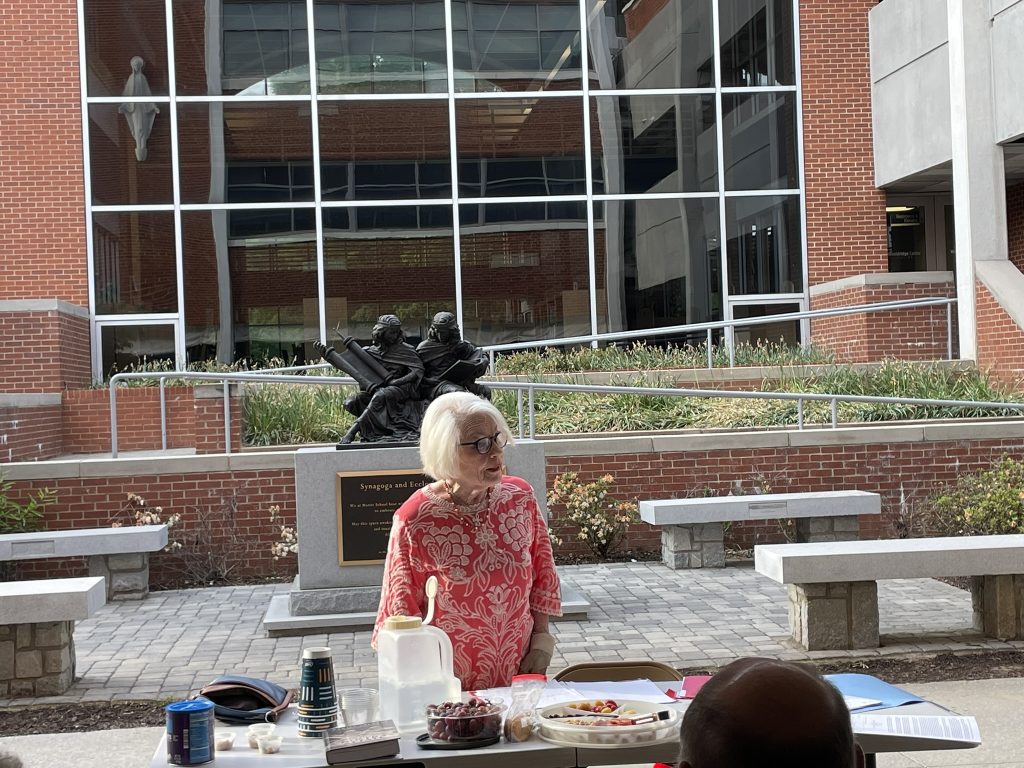
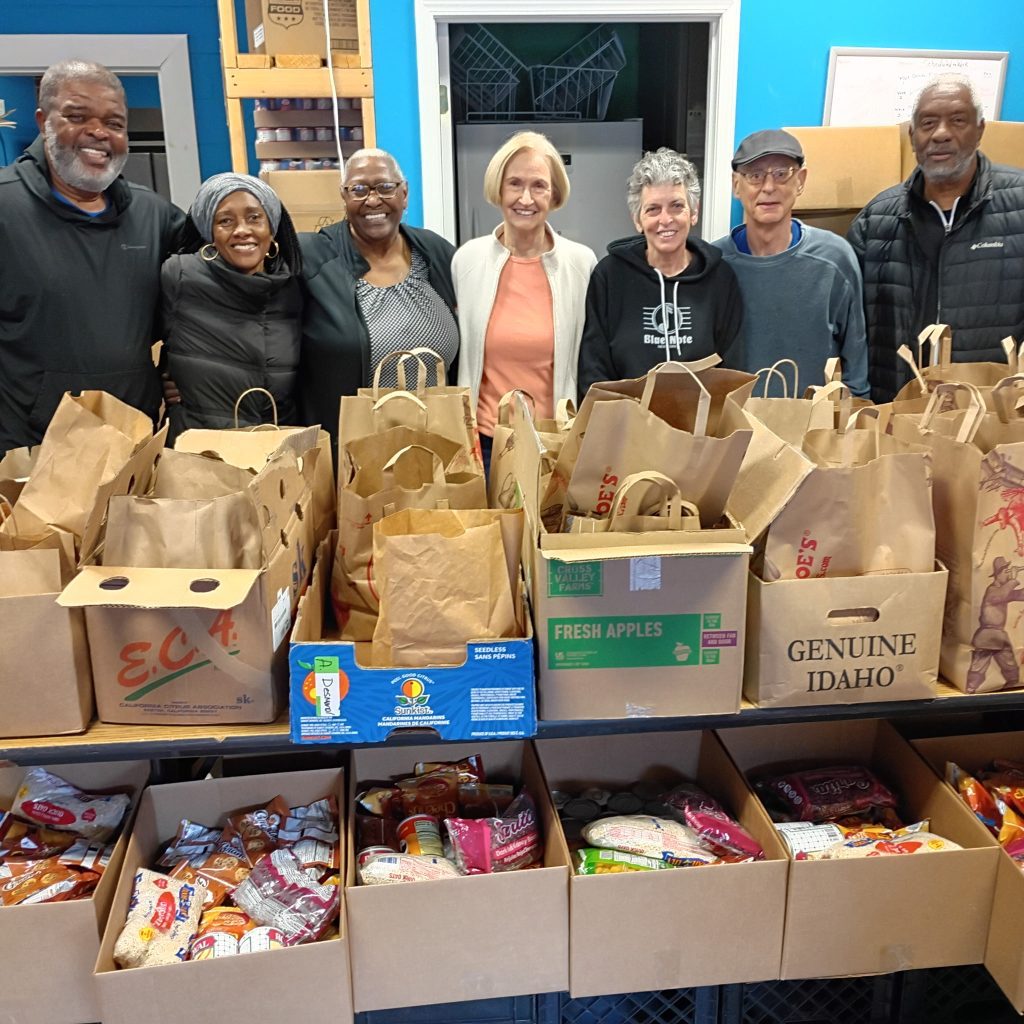
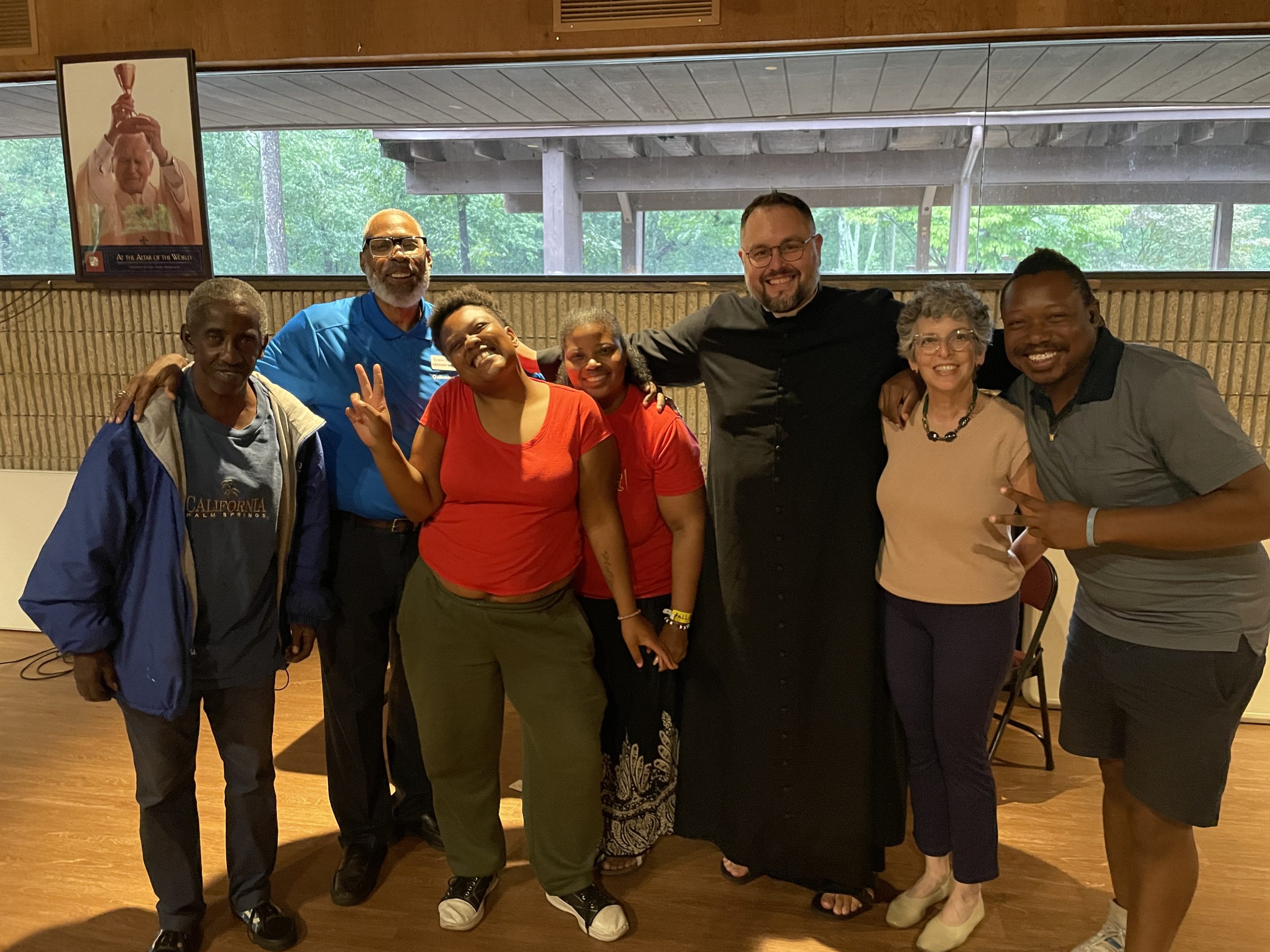
2025 Meeting: Greg White, executive director of A Home for Everyone in Dekalb, recently visited All Saints with four of his unhoused friends. Parishioners learned of the daily challenges of the unhoused in Decatur and creative solutions to address them.